

Your Success, Our Mission!
6000+ Careers Transformed.
Explanation
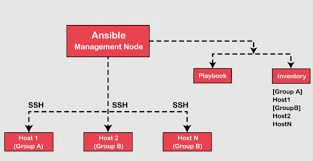
Ansible is a configuration management and automation tool designed to manage system configuration in a simple, agentless manner. It operates using a control node that communicates with managed nodes over standard protocols such as SSH or WinRM. Configuration logic is defined using human-readable YAML playbooks, which describe the desired state of systems rather than step-by-step instructions. Ansible modules execute tasks idempotently, meaning repeated executions produce the same result without unintended changes. This approach ensures consistency across environments and reduces configuration drift.
Table
| Component | Role |
|---|---|
| Control Node | Orchestrates automation |
| Managed Node | Target system |
| Playbook | Configuration definition |
| Module | Task execution unit |
| Inventory | Host grouping |
Example
An operations team uses Ansible to configure web servers across multiple environments. A single playbook installs required packages, configures services, and applies security settings. The same playbook is executed on development, staging, and production servers. Re-running the playbook does not introduce duplicate changes. Configuration remains consistent across all systems. Manual setup errors are eliminated.
Use Cases
• Server configuration automation
• Environment consistency enforcement
• Application dependency management
• Infrastructure standardization
Explanation
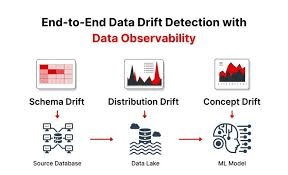
Configuration drift occurs when systems deviate from their intended configuration over time due to manual changes, patches, or inconsistent updates. Drift undermines reliability, security, and reproducibility. Configuration management tools detect and correct drift by continuously enforcing the desired state. Drift handling involves regular configuration checks, immutable infrastructure practices, and automated remediation. By treating configuration as code and applying it repeatedly, teams ensure systems remain compliant and predictable.
Table
| Drift Cause | Mitigation |
|---|---|
| Manual Changes | Automated enforcement |
| Inconsistent Updates | Versioned configs |
| Environment Differences | Unified playbooks |
| Security Gaps | Continuous compliance |
| Human Error | Idempotent execution |
Example
A production server is manually modified during troubleshooting. Over time, it behaves differently from other servers. Scheduled configuration runs detect the deviation and reapply the correct settings. The system returns to its desired state automatically. Audit logs show when drift occurred and was resolved. Reliability is restored without downtime.
Use Cases
• Compliance enforcement
• Long-running infrastructure stability
• Security configuration management
• Predictable environment behavior
Top Tutorials

GATE 2026 Data Science and AI
Explore this free tutorial to understand various concepts of GATE Data Science and AI 2026 . Learn probability, algebra, calculus, etc.

ChatGPT
In this ChatGPT tutorial, learn how to use ChatGPT effectively. Master the art of conversational AI with our step-by-step lessons. Start to learn ChatGPT today!

Artificial Intelligence
Dive into our comprehensive Artificial Intelligence tutorial and master the fundamentals of AI. From an introduction to advanced concepts, learn AI from scratch

 in Bengaluru, India



All Courses (6)
Master's Degree (2)
Professional Certifications (4)
Ideal for working professionals and graduates
Outcomes: 5-40 LPA Job + Masters Degree

 Infrastructure Configuration


 in Bengaluru, India