

Your Success, Our Mission!
6000+ Careers Transformed.
Text preprocessing sounds straightforward on paper, but in practice it’s where many NLP projects quietly struggle. Real-world language is unpredictable, and small decisions made at this stage can have a surprisingly large impact on model performance.
One common challenge is noise vs signal confusion. Not everything that looks messy is useless. Emojis, punctuation, or repeated characters may seem like noise, but in tasks like sentiment analysis, they often carry strong emotional cues. Removing them blindly can strip away important information and weaken your model.
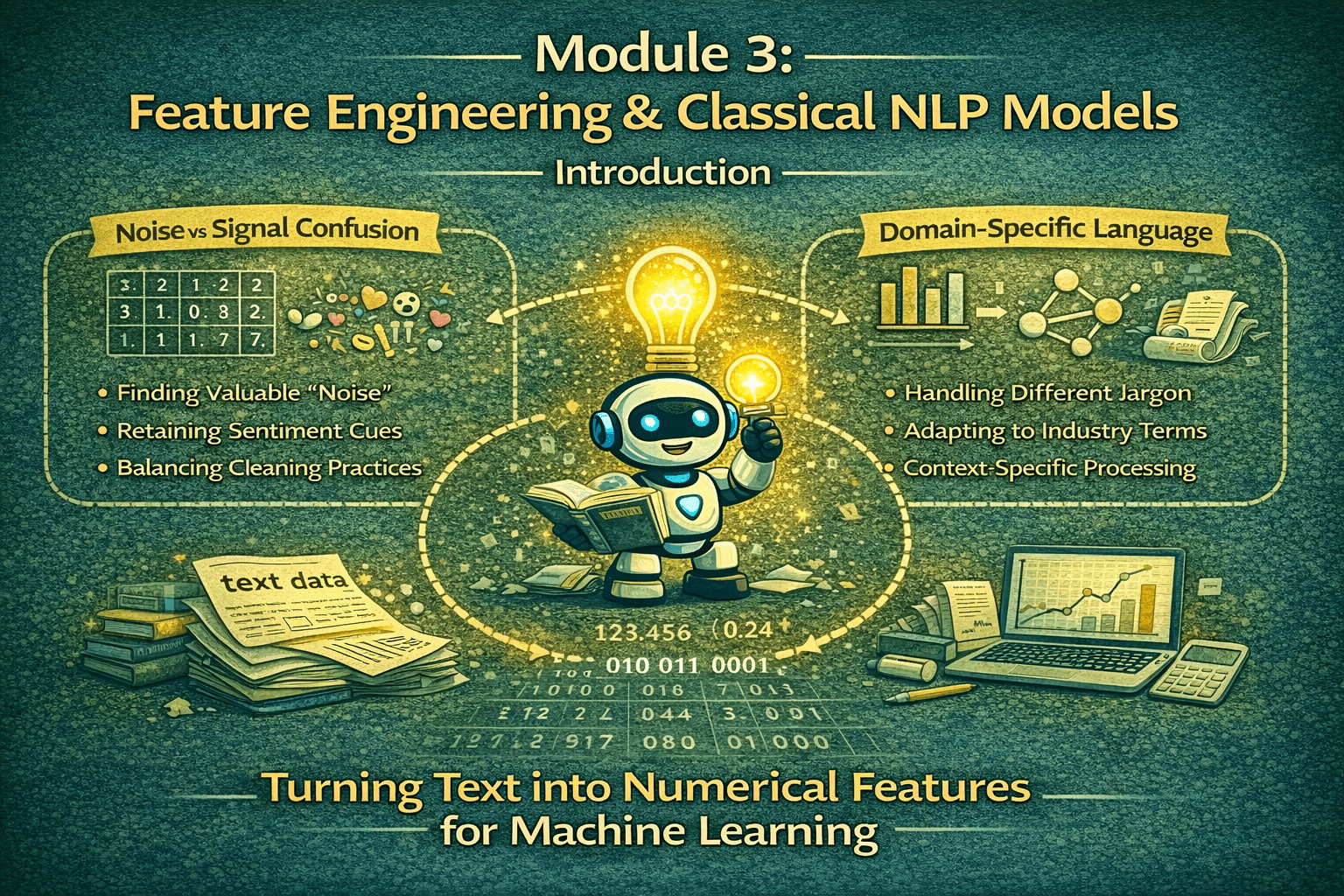
Another issue is domain-specific language. Words can mean very different things depending on context. For example, “charge” in finance, law, and electronics has completely different meanings. Generic preprocessing rules may work poorly if they ignore the domain your text comes from. This is why one-size-fits-all pipelines often fail in production.
Inconsistent language usage is another major hurdle. Social media text mixes slang, abbreviations, spelling mistakes, multiple languages, and informal grammar—all in the same sentence sometimes. Traditional preprocessing steps may break or oversimplify such data, leading to loss of meaning.
There’s also the problem of over-preprocessing. Removing too many words, aggressively stemming text, or shrinking vocabulary too much can make different sentences look artificially similar. When this happens, models struggle to learn meaningful distinctions.
Finally, preprocessing decisions are often task-dependent, but teams forget this. The “best” preprocessing pipeline for topic modeling may be completely wrong for intent detection or question answering.
The key lesson here is balance. Good preprocessing is thoughtful, iterative, and guided by the problem you’re solving. In NLP, careful handling of text often matters more than fancy models—and getting this step right sets everything else up for success.
Top Tutorials

Python
Python is a popular and versatile programming language used for a wide variety of tasks, including web development, data analysis, artificial intelligence, and more.
SQL
The SQL for Beginners Tutorial is a concise and easy-to-follow guide designed for individuals new to Structured Query Language (SQL). It covers the fundamentals of SQL, a powerful programming language used for managing relational databases. The tutorial introduces key concepts such as creating, retrieving, updating, and deleting data in a database using SQL queries.

Data Science
Learn Data Science for free with our data science tutorial. Explore essential skills, tools, and techniques to master Data Science and kickstart your career

 in Bengaluru, India



All Courses (6)
Master's Degree (2)
Fellowship (2)
Certifications (2)

 Types of Text Data and Data Sources

 in Bengaluru, India